
How SALMA Software reinforces clinician confidence in daily maternal-infant decisions

Structured case histories, evidence-based clinical protocols, and reasoning tools clarify diagnostic dilemmas in complex lactation consultations.
A consult concludes, but a lingering question often follows the clinician: "Did I connect every vital piece of information across both mother and baby?"
Imagine a clinical scenario where a mother reports acute nipple pain, describes latching difficulties, and expresses deep anxiety about her infant's weight gain. You have taken a detailed obstetric and perinatal history and performed a thorough clinical assessment within your scope. Now you must organize your findings, identify any missing assessments, and formulate a collaborative plan of care.
Throughout that diagnostic and planning process, having clinical software designed to mirror your cognitive workflow makes a profound difference.
A Unified Case Record that Preserves Full Context
In lactation consulting, clinical data only makes sense when viewed in the context of the interdependent dyad. A note from a previous consult, behavioral changes observed by parents, and physical examination findings gathered today are parts of a single continuous health story.
SALMA structures patient care around dyad history, clinical assessment, longitudinal tracking, and medical reports. This framework provides an intuitive workspace to document findings and review the big picture before making treatment recommendations.
Professional clinical confidence is grounded in being able to clearly articulate what is known, what has been clinically tested, and what warrants further evaluation.
Reflective Prompts that Support Diagnostic Reasoning
Clinical decision support provides real value when it prompts thoughtful clinical review. What pieces of information are still missing? Are there maternal or infant red flags requiring pediatrician referral? Which evidence-based protocol should guide this individualized plan?
SALMA combines contextualized lactation AI with validated clinical assessment tools, tongue-tie scoring systems, and WHO growth standards. Its role is to support thorough review and meticulous documentation.
The World Health Organization (WHO) enshrines human autonomy among its core principles for healthcare AI: medical professionals must always retain ultimate oversight and control over health decisions. This guiding principle ensures clinicians evaluate, corroborate, and decide every clinical step.
Embracing Clinical Humility Strengthens Care
Practicing with excellence includes recognizing when a preliminary conclusion lacks sufficient empirical support. A well-defined clinical question allows the practitioner to consult primary medical literature, coordinate with pediatricians or IBCLCs, or schedule targeted follow-up.
This is the philosophy at the heart of SALMA: supporting the clinician with structured data, explicit reasoning aids, and complete administrative ease, while safeguarding their essential clinical autonomy and professional scope.
You provide clinical wisdom and compassionate human care. SALMA organizes the case and clarifies every step forward.
Designed for real-world lactation care
Start practicing with connected dyad records, WHO growth percentiles, and specialized clinical AI.
Recommended articles
Beatriz Vilreales leads a new era in clinical lactation with Prolactar España and Salma Software

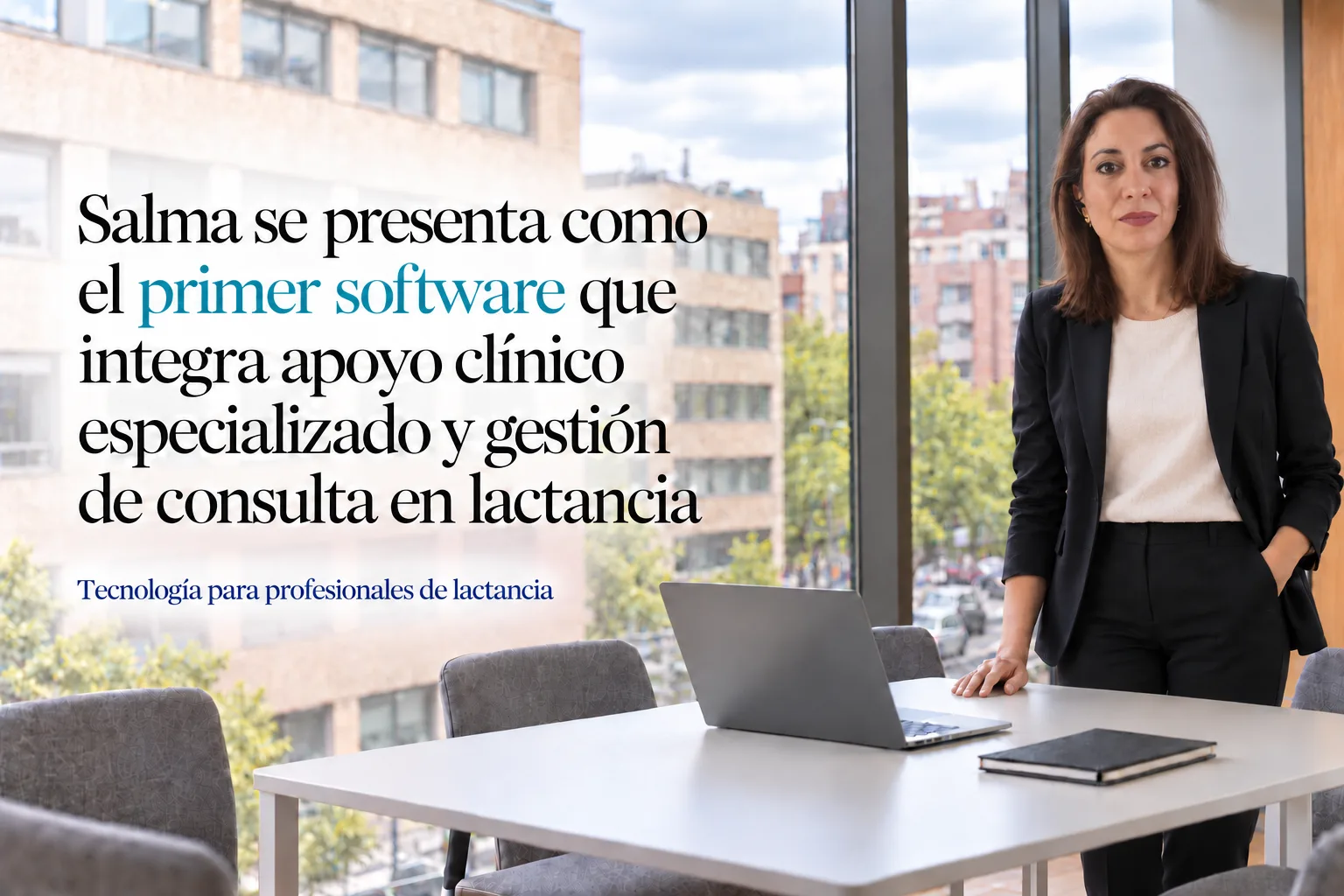
SALMA launches as the first software uniting specialized clinical decision support and practice management for lactation